

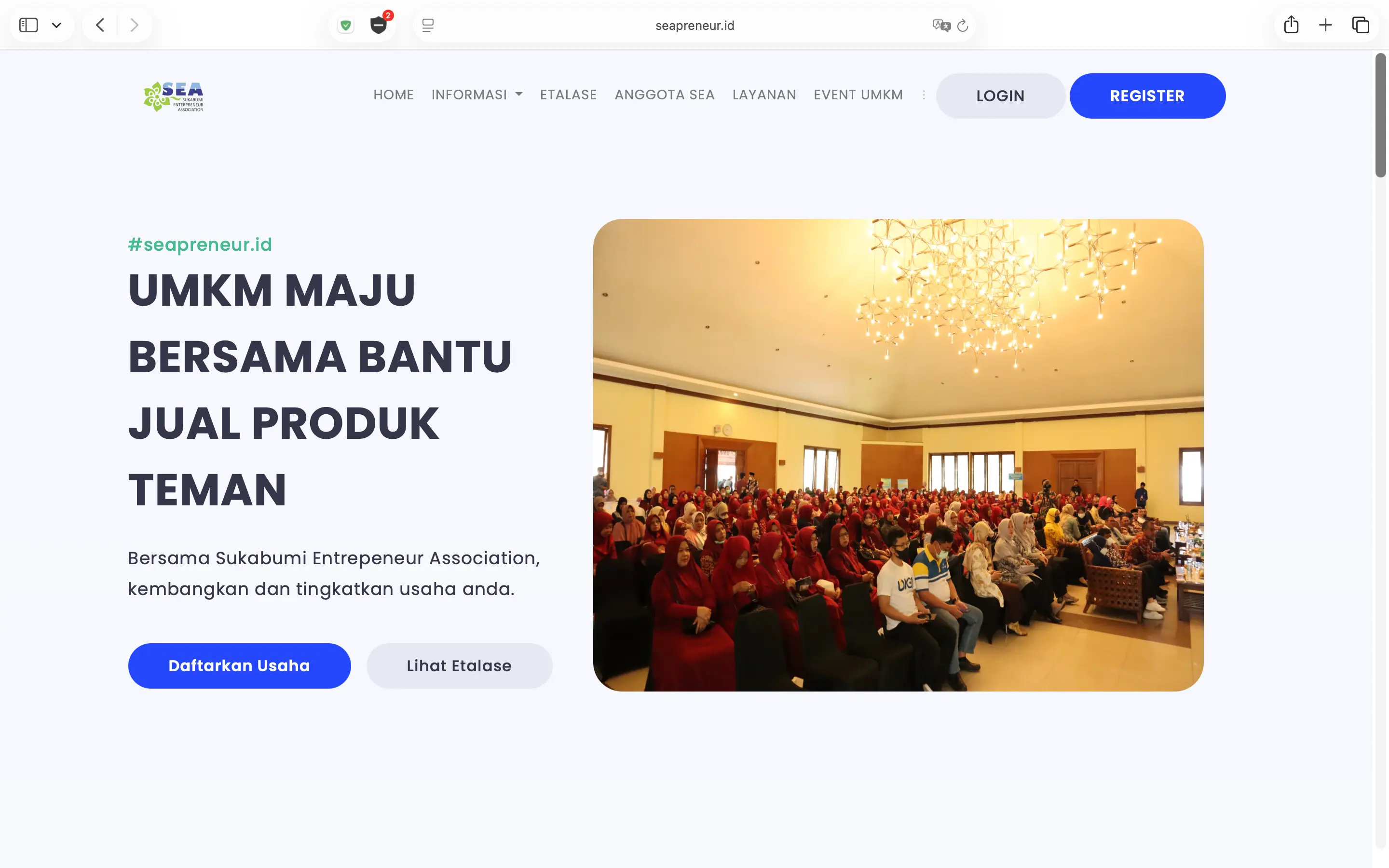
Project Overview
Seapreneur.id, known as Warung Digital Seapreneur, was a digital storefront and marketplace for micro, small, and medium enterprises (MSMEs, or UMKM) in Sukabumi, Indonesia.
We collaborated with lecturers from Universitas Muhammadiyah Sukabumi (UMMI) and the Sukabumi Entrepreneur Association (SEA) to build a platform where local entrepreneurs could showcase products, receive orders, and manage their online sales. Initiated in 2022 through the Matching Fund Kedaireka program, the project combined application development with student supervision and mentoring for participating entrepreneurs.
Status: The project and its former domain, seapreneur.id, are no longer active.
The Challenge
Local entrepreneurs needed a practical way to bring their products online. Sellers needed to maintain product information and handle orders, customers needed a clear purchasing process, and platform operators needed tools to oversee daily activities.
Adoption was also part of the challenge. The application needed to be accompanied by guidance so entrepreneurs could use it in their businesses, while students gained experience through participation in the project.
Our Responsibilities
We handled the development process from understanding the requirements to implementing and testing the application, alongside student supervision and entrepreneur mentoring.
- Requirements analysis: We translated marketplace, promotion, and operational needs into application requirements.
- Design: We planned the customer journey, seller workflows, management screens, and supporting data structures.
- Implementation: We built the storefront, purchasing flow, and tools for sellers and administrators.
- Testing: We checked application behavior across the main workflows.
- Student supervision: We guided students as they participated in the development process.
- MSME mentoring: We helped entrepreneurs understand and use the platform to support their businesses.
Our Solution
A Digital Storefront for Local Products
We built a searchable product catalog with categories, product details, photographs, and entrepreneur profiles. Sellers could maintain their listings, update images, and manage stock through the application.
This gave participating businesses a shared space to present their products and gave customers a way to discover what local entrepreneurs offered.
Purchasing and Order Management
We connected product discovery with shopping-cart and checkout workflows. Customers could manage shipping addresses, submit payment confirmations, view order history, access invoices, confirm receipt, and leave reviews.
For sellers and platform operators, we provided tools to review payments, manage orders, and update shipment information. These functions supported the work that followed a purchase as well as the customer's ordering experience.
Administration and Sales Reporting
We developed management tools for products, categories, members, customers, and orders. Different access levels supported the responsibilities of sellers and platform administrators.
Daily, monthly, and yearly sales reports helped sellers review their transactions. Administrators could also export order records for further reporting and operational review.
Community Activities and Services
Beyond the marketplace, we included news, galleries, events, and service information. Registration and certificate functions supported activities offered through the platform, connecting commerce with opportunities for learning and participation.
Collaboration and Mentoring
We worked with UMMI lecturers and SEA throughout the project, connecting the development work with the program's goals and the needs of participating entrepreneurs.
Our involvement extended to supervising students and mentoring MSMEs in using the application. This kept the delivery focused on both the platform and the people who would prepare product information, manage listings, and handle orders.
What We Delivered
We delivered a marketplace that brought product promotion, purchasing, order handling, and administration into one platform. Entrepreneurs could maintain their storefront information, customers could move from browsing to ordering, and operators could manage transactions and review sales records.
Alongside the application, we provided student supervision and entrepreneur mentoring. The project brought together our experience in software development and practical user support to address the needs of a local business community.